The Pros of the HDTS Skating Treadmill in the Development of a Child and Hockey Player
The Pros of the HDTS Skating Treadmill in the Development of a Child and Hockey Player
In modern hockey, talent alone is no longer enough. For a player to become fast, stable, technically correct, and confident on the ice, targeted skating development is necessary. That is why specialized skating treadmills, such as HDTS (Hockey Development Training System), are gaining increasing importance. HDTS is a system designed for the individual development of hockey players using a skating treadmill, diagnostics, coaching analysis, and a structured training environment. HDTS positions itself as a specialized hockey development system for children, amateurs, teams, and professional players.
Technique Improvement in a Safe and Controlled Environment
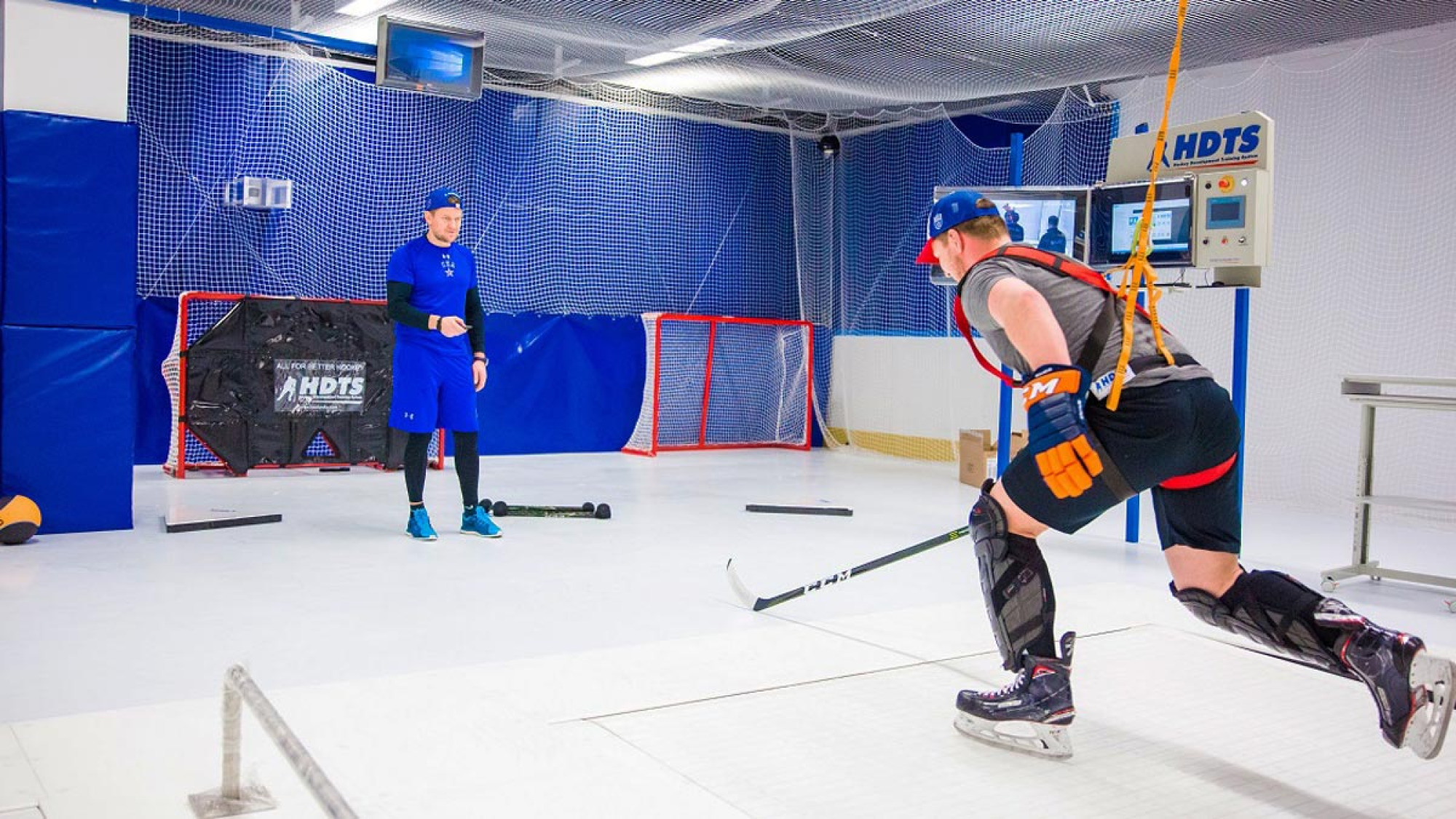
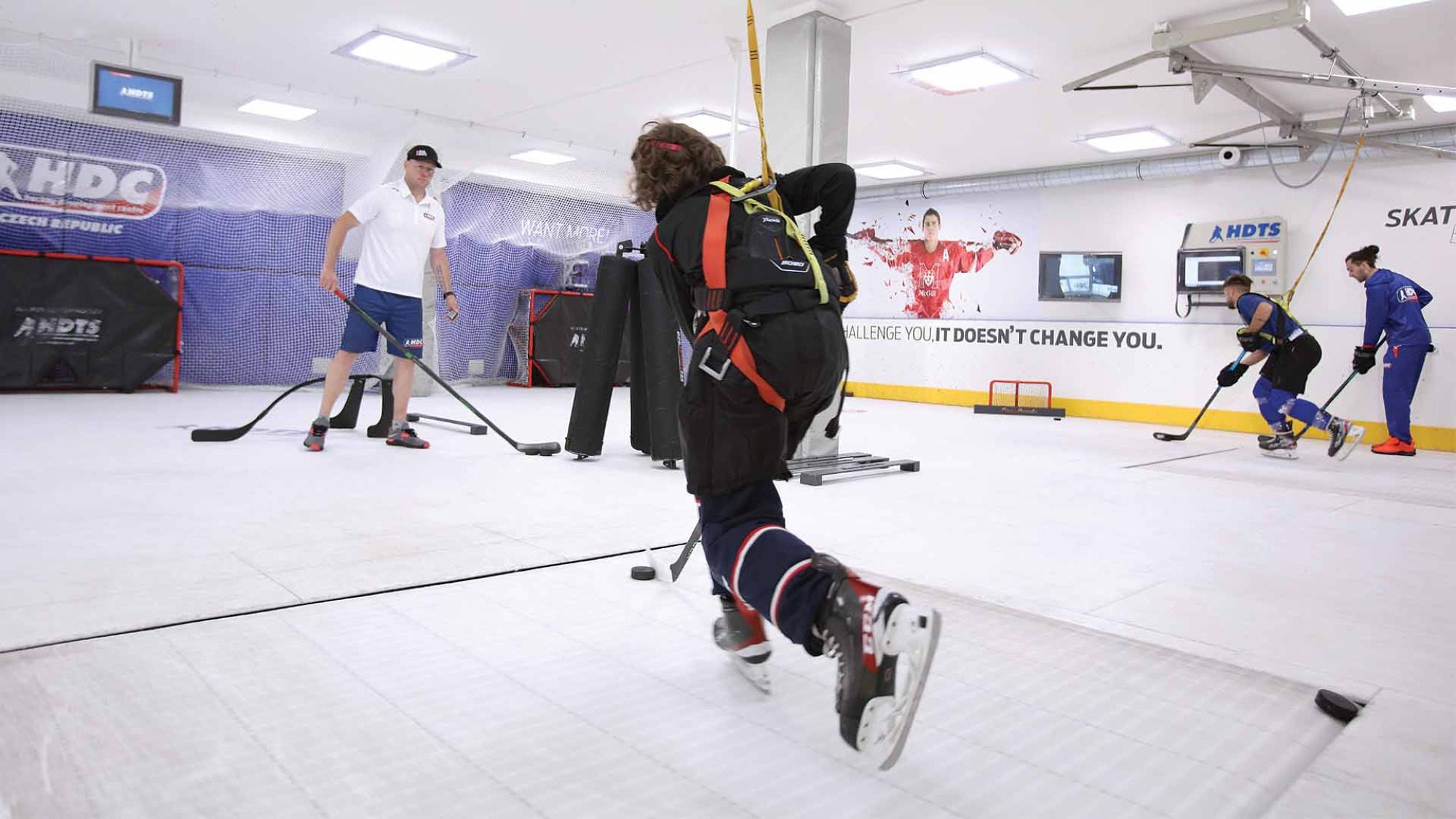
One of the biggest advantages of the HDTS skating treadmill is the ability to work on skating technique under highly controlled conditions. On regular ice, it is often difficult for a child or hockey player to understand what they are doing wrong—movement happens quickly, and in game situations, there is stress, opponents, the puck, and fatigue. The treadmill allows you to focus specifically on stride length, body position, knee bend, balance, arm movement, and push-off.
This is especially important for children, as movement habits formed at an early age greatly influence a player's later development. If a child learns to skate technically correctly from the beginning, it is easier for them to develop speed, agility, and stability.
Faster Progress in Skating Skills
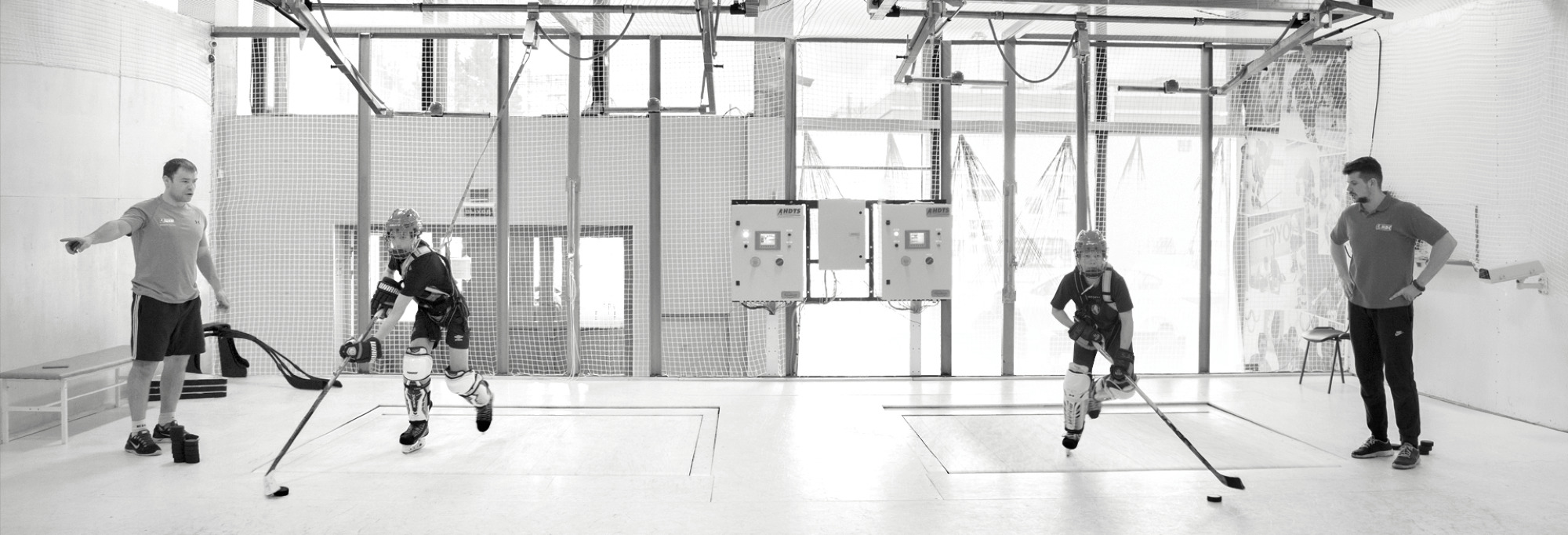
The HDTS treadmill helps a player repeat the same movement many times. Repetition is the foundation of technique improvement. During an on-ice practice, a player has to wait in line, perform various drills, and adapt to the group's pace. On the treadmill, attention is entirely devoted to a specific player and their individual mistakes.
This means that training becomes much more targeted. The player doesn't just "skate more," but skates smarter—with a clear goal and under the coach's control.
Balance and Coordination Development in Children
In a child's development, skating is not just a sports skill. It also develops balance, coordination, body control, and spatial awareness. The HDTS skating treadmill helps a child become aware of their body in motion—how to hold their back, how their legs work, how to distribute weight, and how to maintain stability.
These skills are useful not only in hockey but also in the child's overall physical development. The child becomes more agile, secure, coordinated, and confident in their abilities.
Individual Approach to Each Player
Every child and hockey player has their own strengths and weaknesses. One lacks balance, another lacks push-off power, and someone else needs proper body positioning. The main advantage of the HDTS system is individualized development. HDTS describes its approach as an individual player development model based on research, technology, and specialized training methodology.
This means that training is not a one-size-fits-all approach. The coach can see specific mistakes, correct them immediately, and give the player precise instructions.
Building Confidence on the Ice
Confidence is very important for children. If a child feels insecure on skates, they are afraid of making mistakes, fall, avoid contact, and cannot fully demonstrate their abilities in game situations. By improving skating technique and balance, the child becomes more secure.
When a child feels they can start moving faster, stop better, turn, and stay on their skates, they also become more active in the game. This directly affects both athletic performance and the motivation to continue training.
Development of Speed, Strength, and Endurance
In hockey, it is very important not only to skate well but also to be able to maintain speed throughout a shift. The HDTS skating treadmill allows players to work on leg strength, push-off power, and endurance. The player learns to skate more economically—with proper technique, fewer unnecessary movements, and more efficient energy use.
This is crucial because a good hockey player is fast not just in the first few seconds. They must be able to maintain quality even under fatigue—in the third period, during an intense shift, or at a crucial moment in the game.
Better Preparation for Game Situations
Skating is the foundation of hockey. If a player skates poorly, it is harder for them to shoot, pass, defend, change direction, and battle for the puck. The HDTS treadmill helps strengthen this foundation. When skating becomes more stable and automatic, the player can focus more on game understanding, puck control, and decision-making.
Therefore, such a treadmill is not just a "skating machine." It is a tool that helps a hockey player become a more complete player.
Suitable for Different Ages and Levels
The HDTS system is positioned as suitable for various categories of hockey players—from children and amateurs to professional players. This is important because skating technique must be developed at all ages. For younger children, the emphasis is on balance, movement fundamentals, and confidence. For youth—on speed, strength, agility, and technique precision. For adult and professional players—on efficiency, power, and nuances that can provide a competitive edge in the game.
Conclusion
The HDTS skating treadmill is a valuable assistant in both a child's overall physical development and a hockey player's professional growth. It helps improve skating technique, balance, coordination, speed, strength, and confidence on the ice. The biggest advantage is the individual approach—the player receives direct attention, precise error correction, and a targeted development process.
For a child, this means a more secure and correct skating foundation. For a hockey player, this means greater speed, better movement economy, and higher performance in the game. Therefore, the HDTS treadmill is not just modern equipment, but also a crucial investment in an athlete's long-term development.